Dear Students:
I appreciate Marshall Rosenberg the creator of Nonviolent Communication, A Language of Life, much like I appreciate Moshe Feldenkrais. Both men gave us life changing methods that when practiced can lead to inner & outer peace.
Dr. Rosenberg taught people how to empathically listen because he knew that without heartfelt connections, conflicts could not be resolved. He said, “You see if we are using nonviolent communication and we learn how to empathically connect with what is going on in other people at any given moment, the other person cannot not communicate with us. Because even silence is a very loud powerful message.”
Marshall explains more in the video above, about how he empathically connected with a young woman who was too afraid to speak to him. He kept feeling “what was alive in her” during her silence and in a fifth session she was able to awkwardly give him a written message. Because his patience & loving manner reached her heart a healing relationship began.
Dr. Rosenberg’s Definition of Violent Communication: judging others, bullying, having racial bias, blaming, finger pointing, discriminating, speaking without listening, criticizing others or ourselves, name-calling, reacting when angry, using political rhetoric, being defensive or judging who’s “good/bad” or what’s “right/wrong” with people; ~Nonviolent Communication, a Language of Life, back cover.
In the other video (below), Rosenberg is interviewed and shares on topics ranging from how he created A Language of Life, to his vision for creating peaceful societies. Enjoy reading some intriguing quotes that came directly from the interview.
Dr. Rosenberg’s Inspiration: “I wanted to look for people who were educated in a way that helped them to enjoy giving to other people no matter what the people around them were doing. And it was from studying such people that I saw that they used a different language than the one I had been educated to use. They used a language of life, a language that helped them connect the life that was going on in themselves & other people.” . .
Marshall Rosenberg’s View on Domination Structures: “So for example if you want to have domination you need to teach people to think in moralistic concepts such as: right/wrong, good/bad, normal/abnormal and teach them that the authorities know which of those words is which – so who’s good, who’s evil, who’s right, who’s wrong. So you shape peoples’ mentality that way and then they make good little boys & girls and good little citizens in domination structures.”
Dr. Rosenberg’s Vision: “So what we really need are to create structures that support life rather than create this division to begin with. So yes, until we get those structures in place we do need to do a lot of reconciliation work. But we’re interested in primary prevention which means radically transforming the domination structures on our planet. A domination structure being defined as a government where a few people dominate many for their own advantages.”
 Marshall Rosenberg on Restorative Justice: “Restorative Justice is a very radical concept because it means instead of punishing people we need to look at crime in a total context, a total community context, and we need to get the victim & the perpetrator & the community all involved in a healing and restoration of things to a place that is good for everybody. And to be conscious that punishing a person is just going to make a society worse.”
May this post & last month’s post help you learn better ways to relate to yourself & others throughout the holiday season. Peace to all on Earth!
~Donna
Contact Donna Bervinchak at:
 upon how you are moving, sensing, feeling & thinking. With this in mind, I created an Awareness Through Movement exploration for you to experiment with this summer. The mini-lesson can help enrich the quality of how you engage in activities from quiet to vigorous ones, based on how flexible your breathing parts are. It is designed to teach your diaphragm to move in many directions like a balloon. This can make your ribs become more malleable so you can move air in & out of your lungs more easily! Discover how to change your rib-cage into a rib-basket by simply using your awareness & imagination to direct your breath.
 sideways into the right side of your ribs, many times. Imagine your right lung expanding towards your ribs near your armpit, in the middle and near the lower ribs. Sense that when you inhale each rib on the right side moves further away from each other. Notice what happens to the ribs on the left side. Rest. Now try the same exploration on the other side.
2) This time, sit and hug yourself with your hands on opposite shoulders with your elbows crossed & resting against your chest. With your head and eyes, look down towards your belly, round your back and roll your pelvis backwards. Stop where you feel most comfortable. Direct your breath towards the floating ribs near your lower back area and downward towards your pelvic floor. Sense the ribs in the lower back area on both sides, widening on the inhale and narrowing on the exhale.
3) Sit and place your hands on your forehead with your elbows facing forwards. Look up with your head and elbows and allow your pelvis to roll forwards so your tailbone will face the back of your head. In this
sideways into the right side of your ribs, many times. Imagine your right lung expanding towards your ribs near your armpit, in the middle and near the lower ribs. Sense that when you inhale each rib on the right side moves further away from each other. Notice what happens to the ribs on the left side. Rest. Now try the same exploration on the other side.
2) This time, sit and hug yourself with your hands on opposite shoulders with your elbows crossed & resting against your chest. With your head and eyes, look down towards your belly, round your back and roll your pelvis backwards. Stop where you feel most comfortable. Direct your breath towards the floating ribs near your lower back area and downward towards your pelvic floor. Sense the ribs in the lower back area on both sides, widening on the inhale and narrowing on the exhale.
3) Sit and place your hands on your forehead with your elbows facing forwards. Look up with your head and elbows and allow your pelvis to roll forwards so your tailbone will face the back of your head. In this  position, direct your breath towards your chest and upwards towards your clavicles. Sense when you inhale, your sternum from the inside of yourself moves away from your vertebrae between your shoulder blades.
4) If you want, I suggest to try other positions to explore breathing in. Be creative & have fun making different shapes with your body.
5) Sit back in your chair and observe how your breathing has changed. Walk around and observe your breathing. Notice throughout your day how your breathing changes depending upon your activities, and your emotional and mental state of mind.
position, direct your breath towards your chest and upwards towards your clavicles. Sense when you inhale, your sternum from the inside of yourself moves away from your vertebrae between your shoulder blades.
4) If you want, I suggest to try other positions to explore breathing in. Be creative & have fun making different shapes with your body.
5) Sit back in your chair and observe how your breathing has changed. Walk around and observe your breathing. Notice throughout your day how your breathing changes depending upon your activities, and your emotional and mental state of mind. 2.Now pretend your nose has a feather at the end of it and create a line in space to the left & right.
 sun through simple means and receive it’s many benefits.
 comfortably. Focus on letting your arms loosely dangle like pendulums as you slowly rotate. If the sun is high in the sky, move your head 10
 demonstrating where to place your hands. Nathan also shows other suitable positions to palm in.)
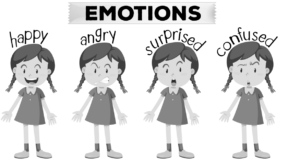 negative thinking.
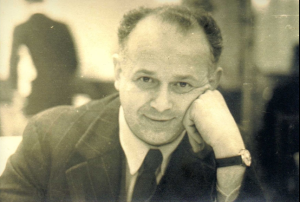 and you don’t help them to grow into individuals where they have very strong faith in themselves and appreciation of their own value and they don’t listen to anybody but when it is of very intense public social importance.
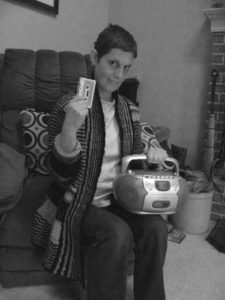 for such a priceless gift even though I did not have a device to listen to them on.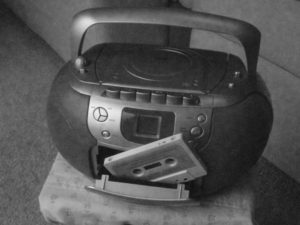
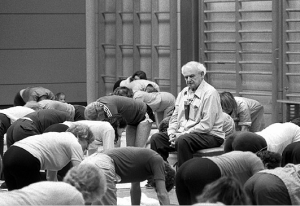 they actually do. And therefore I consider the people who do come to such sort of work like we do – I believe they are the cream of our society. In spite of being neurotic and having trouble but they are the only ones who actually have the feeling that they deserve and can be better than they do and actually do something about getting it.”
  done speaking that day.
 understand the essence behind the source of what I wish to share. His latest