Dear Students:
Recently Brent came to me for a Functional Integration® session after he twisted his knee during a hike. He rested for two weeks and did Awareness Through Movement® lessons on his own but still needed some individual attention. He said he also developed pain in his lower back and thought it was due to compensating for his injured knee while doing his janitorial job.
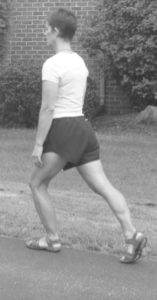
To start, I asked him to walk as if he were at work. I noticed that he took very long strides and surmised this was probably the reason he was experiencing back pain as well as knee inflammation.
Next, I had Brent take one step in slow motion so he could feel what it was like to shift his weight from his standing leg to the one moving forward. He habitually took a huge step and landed on a bent leg that required his muscles to work unnecessarily to keep him upright. Then I asked him to step half the size he chose and then half that size. He soon discovered that a smaller gait allowed him to land on a stable, straight leg that offered him skeletal support. This permitted him to rest some muscles for a moment while he transferred his weight ahead. He became aware that this also provided him to use less muscular effort.
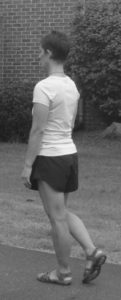
Then I began a Functional Integration® session with Brent. My hands sensed that the muscles in his feet were taut, likely from walking in this manner during his custodian tasks. I gently moved his tarsal bones to relieve excessive tension and to broaden his range of movement through his ankles, knees & hips. After that, I found it would be helpful to offer him more freedom in rolling his pelvis through his spine, in a similar way required for walking. I felt, that connecting these areas to the motions of his legs was a very important piece to calming his back pain.
At the end of the session, I asked Brent to walk with different step lengths. I directed his attention on how his pelvis moved differently with each stride. He immediately sensed that he created strain in his back every time he took strides that were too big. Brent expressed that he was pleasantly surprised to learn he could cover more ground at work at a faster pace with shorter gaits and without harming his knee or back.
May this story inspire you to explore self-awareness on a deeper level through Functional Integration sessions.
~Donna
F.Y.I.: To get a smart meter removed from your home, to stop the 5G Deployment or to find out about products that can help electromagnetic sensitivity click here.
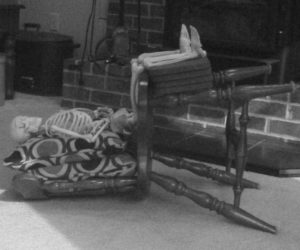 This pose is easy to imagine as it resembles sitting on a chair that is recumbent on the floor. To avoid excessive muscular tension, be sure to rest your legs naturally, so that your knee caps point more out to the sides then towards the midline.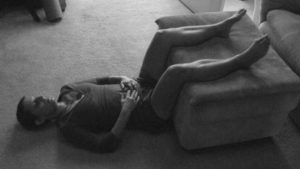
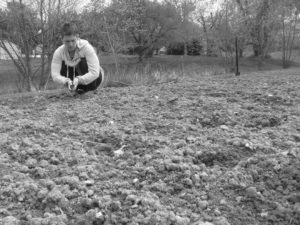 the seeds inside your mouth so they can get to know you.
 seeds & nuts as they are abundant in nutrients, anti-oxidants & possess healing properties.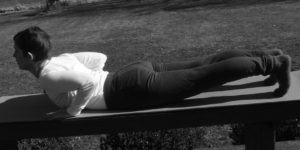
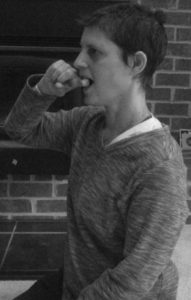 1) Place an index finger, bent like a hook, between your teeth without intentionally biting down upon it. Next, make a fist with your other hand and sense if this causes your teeth to press into the finger in your mouth.
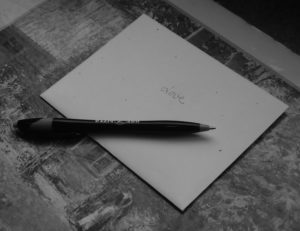 1) How lightly can you hold a pen and still have good penmanship? When you sign a check do you have white knuckles?
2) While typing on the computer do your shoulders rise up to your ears? Does your tongue press or move around in your mouth in an unwanted way?
3) Is it possible to text on your phone with space between your lips and teeth? Do your thumbs continue to reach and press when you are finished with your message?
1) How lightly can you hold a pen and still have good penmanship? When you sign a check do you have white knuckles?
2) While typing on the computer do your shoulders rise up to your ears? Does your tongue press or move around in your mouth in an unwanted way?
3) Is it possible to text on your phone with space between your lips and teeth? Do your thumbs continue to reach and press when you are finished with your message?
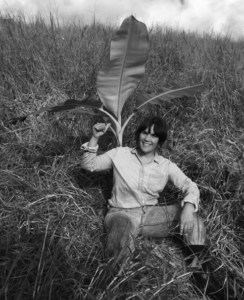
 shared she was happily surprised by the results of the experiment. She explained, since soy is in almost everything it was hard for her to completely abstain from it, at first.
 I proposed that she take a break from her exercise routine during the three weeks we worked together.
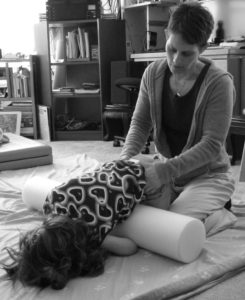 bearing bone in the body, could heal as a chip was removed from it.
 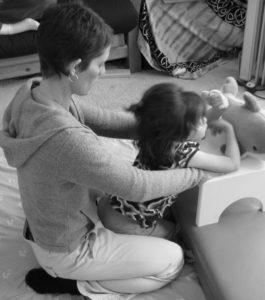 flexible and I began to organically understand how to properly prepare children and adults for walking.