Dear Students:
Moshe Feldenkrais called the kinaesthetic sense a “sixth sense” and explained that, ” it is a sense by which muscular motion, weight, position in space, etc., are perceived.” ~The Body & Mature Behavior by Moshe Feldenkrais, page 108.
Learning how to develop the kinaesthetic sense is one of the many gifts Moshe Feldenkrais gave his students with his remarkable method. By including all the information he accumulated over his life-time as a cartographer (map maker), a professional soccer player, a black belt martial artist, an engineer, physicist & mathematician, he fine tuned his own sense of spatial awareness & body orientation. This gave him an innate ability to effectively teach others how to proprioceptively improve through Functional Integration (FI) sessions and Awareness Through Movement (ATM) classes.
“A person may have good orientation and movement with a mostly unconscious feel for location. Feldenkrais brought these feelings into conscious awareness and investigated the processes by which we assemble the spatial awareness that our feel for location depends upon. He observed the common, spontaneous movements of children and had a keen appreciation for how their movements reflected an awareness of their situations in time and space.” ~Moshe Feldenkrais: A Life in Movement, by Mark Reese, page 69.
An example of how you use your ‘sixth sense’ is, when you realize where your head & pelvis are while standing, sitting, walking, dancing, flipping,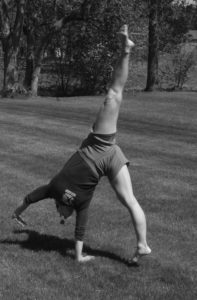 etc. Another way is by sensing where you are located in a room, a building, a town, a state, a country and potentially on the earth & in the universe!
I include a video for you to observe seven amazing trampoline athletes demonstrating their spatial awareness. May it help you imagine some of the possibilities you have as a human being. I ask – how kinesthetically sensitive do you wish to become?
I hope to assist you in achieving your goals along the way during ATM classes, workshops and/or a FI sessions. See you soon!
Peace to all on Earth!
~Donna
Contact Donna Bervinchak at:
 fertilizers or manure!
 people, is something I never imagined would become necessary.
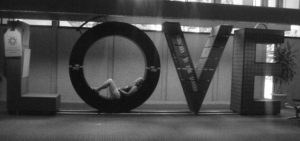 reversed the order of the words “thyself” and “neighbor” in this commandment. I share this with you, hoping it will help you to maintain your health & peace of mind during this holiday season.
 bullying, having racial bias, blaming, finger pointing, discriminating, speaking without listening, criticizing others or ourselves, name-calling, reacting when angry, using political rhetoric, being defensive or judging who’s “good/bad” or what’s “right/wrong” with people; ~
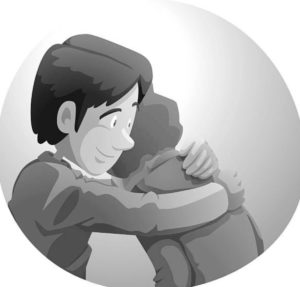 Marshall Rosenberg on Restorative Justice: “Restorative Justice is a very radical concept because it means instead of punishing people we need to look at crime in a total context, a total community context, and we need to get the victim & the perpetrator & the community all involved in a healing and restoration of things to a place that is good for everybody.
 upon how you are moving, sensing, feeling & thinking. With this in mind, I created an Awareness Through Movement exploration for you to experiment with this summer. The mini-lesson can help enrich the quality of how you engage in activities from quiet to vigorous ones, based on how flexible your breathing parts are. It is designed to teach your diaphragm to move in many directions like a balloon. This can make your ribs become more malleable so you can move air in & out of your lungs more easily! Discover how to change your rib-cage into a rib-basket by simply using your awareness & imagination to direct your breath.
 sideways into the right side of your ribs, many times. Imagine your right lung expanding towards your ribs near your armpit, in the middle and near the lower ribs. Sense that when you inhale each rib on the right side moves further away from each other. Notice what happens to the ribs on the left side. Rest. Now try the same exploration on the other side.
2) This time, sit and hug yourself with your hands on opposite shoulders with your elbows crossed & resting against your chest. With your head and eyes, look down towards your belly, round your back and roll your pelvis backwards. Stop where you feel most comfortable. Direct your breath towards the floating ribs near your lower back area and downward towards your pelvic floor. Sense the ribs in the lower back area on both sides, widening on the inhale and narrowing on the exhale.
3) Sit and place your hands on your forehead with your elbows facing forwards. Look up with your head and elbows and allow your pelvis to roll forwards so your tailbone will face the back of your head. In this
sideways into the right side of your ribs, many times. Imagine your right lung expanding towards your ribs near your armpit, in the middle and near the lower ribs. Sense that when you inhale each rib on the right side moves further away from each other. Notice what happens to the ribs on the left side. Rest. Now try the same exploration on the other side.
2) This time, sit and hug yourself with your hands on opposite shoulders with your elbows crossed & resting against your chest. With your head and eyes, look down towards your belly, round your back and roll your pelvis backwards. Stop where you feel most comfortable. Direct your breath towards the floating ribs near your lower back area and downward towards your pelvic floor. Sense the ribs in the lower back area on both sides, widening on the inhale and narrowing on the exhale.
3) Sit and place your hands on your forehead with your elbows facing forwards. Look up with your head and elbows and allow your pelvis to roll forwards so your tailbone will face the back of your head. In this  position, direct your breath towards your chest and upwards towards your clavicles. Sense when you inhale, your sternum from the inside of yourself moves away from your vertebrae between your shoulder blades.
4) If you want, I suggest to try other positions to explore breathing in. Be creative & have fun making different shapes with your body.
5) Sit back in your chair and observe how your breathing has changed. Walk around and observe your breathing. Notice throughout your day how your breathing changes depending upon your activities, and your emotional and mental state of mind.
position, direct your breath towards your chest and upwards towards your clavicles. Sense when you inhale, your sternum from the inside of yourself moves away from your vertebrae between your shoulder blades.
4) If you want, I suggest to try other positions to explore breathing in. Be creative & have fun making different shapes with your body.
5) Sit back in your chair and observe how your breathing has changed. Walk around and observe your breathing. Notice throughout your day how your breathing changes depending upon your activities, and your emotional and mental state of mind. 2.Now pretend your nose has a feather at the end of it and create a line in space to the left & right.